
Reverse Mission Conference 2026 article series · Article 4 of 5
Abstract
The linguistic proximity between Brazil and Portugal can create a missionary illusion: the assumption that sharing a language means sharing a culture. The experience of planting Igreja Baptista Local in northern Portugal suggests otherwise. This article reflects on contextualization, communication, and belonging through a missionary case study that began in 2019. In dialogue with Ronaldo Lidório, Ari Pedro Oro, and Lierte Soares, it argues that cross-cultural mission requires more than lexical translation. It demands listening, learning, relational adaptation, and the ability to distinguish the content of the gospel from the missionary’s cultural forms.
Keywords: Portugal • contextualization • culture • communication • church planting • cross-cultural mission
Speaking a people’s language does not mean understanding a people’s heart.
The trap of familiarity
Brazil and Portugal share enough linguistic, religious, and historical material to create familiarity, but not enough to erase cultural distance. For a Brazilian missionary, arriving in Portugal may initially appear less complex than serving in a context with an entirely different language. Basic communication begins on the first day. Signs can be read, conversations seem accessible, and many cultural references look recognizable.
That is precisely where the trap lies. When difference is obvious, missionaries know they must learn. When difference is subtle, they may assume they already understand. Linguistic proximity can conceal divergent ways of building trust, expressing disagreement, relating to institutions, speaking about faith, responding to public enthusiasm, or interpreting informality.
The missionary report of the Melo family notes that, from their arrival in northern Portugal in 2019, significant effort was invested in relationships with local people and in the cultural adaptation of the whole family. The wording is revealing: the language only “seems” to be the same, while the cultural distance can be considerable (Melo, 2025). The lesson is broadly applicable: linguistic competence is necessary, but it is not the same as intercultural competence.
Culture is deeper than visible customs
In missiology, culture cannot be reduced to food, music, schedules, or clothing. These elements matter, but they sit on the surface of deeper systems of meaning. Culture includes memory, perceptions of authority, forms of belonging, ways of managing conflict, expectations of privacy, rhythms of friendship, and structures of credibility.
This is why a theologically correct message may still be culturally unintelligible. Missionaries hear their own words from within the world that produced them; listeners hear those words within another world. Ronaldo Lidório (2014) insists that communication and culture are inseparable and that Christian mission must pursue two commitments at once: faithfulness to the theological content of the gospel and intelligibility for the receiving community.
This double commitment is demanding. Contextualization does not authorize a church to rewrite doctrine in order to reduce cultural tension. At the same time, biblical faithfulness does not require the preservation of imported styles, vocabulary, programs, or expectations. The right question is not, “How can we reproduce here what worked in Brazil?” but “How can the gospel be faithfully proclaimed and embodied among these people?”
A Portuguese church open to the nations
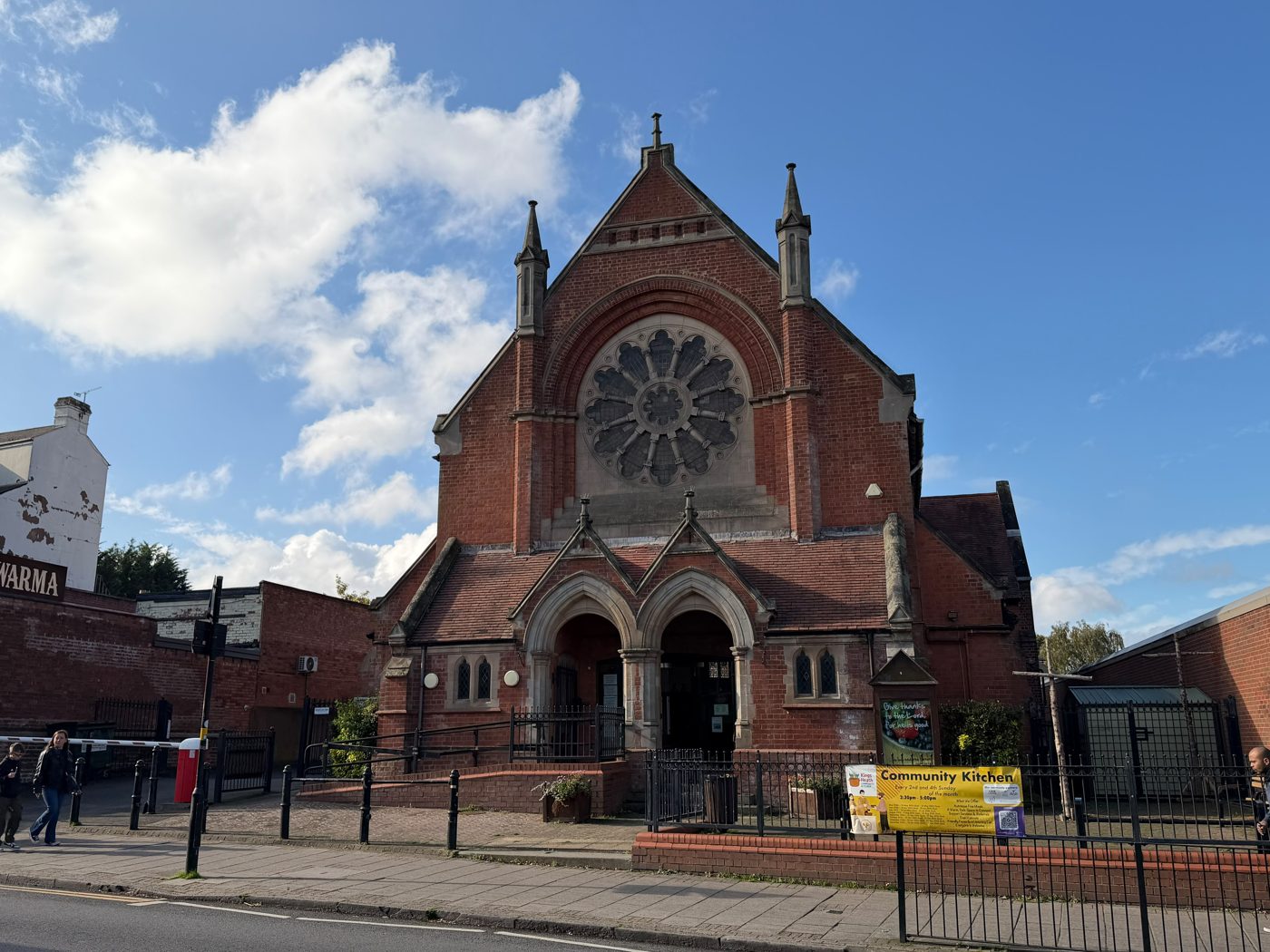
The planting of Igreja Baptista Local began formally in January 2021, during the pandemic, with thirteen people: the missionary family and two Portuguese families. From the beginning, the stated vision was to build a healthy local church with a Portuguese culture—one capable of reaching Portuguese people while remaining open and welcoming to immigrants (Melo, 2026).
That formulation carries missiological significance. A multicultural church does not need to be culturally neutral—such neutrality does not exist in practice. It needs a sufficiently clear local identity so that people from the host culture do not feel like guests in their own land, and a sufficiently gospel-shaped hospitality so that people from other backgrounds are not treated as permanent outsiders.
The challenge is especially important in diaspora contexts. Immigrant churches can offer language, care, social networks, and security to newcomers. These are valuable pastoral functions. Yet when a congregation intends to engage in cross-cultural mission, it must learn to communicate beyond its group of origin. Soares (2026), analyzing Igreja Baptista Local as a case study, emphasizes the importance of resisting the simple importation of Brazilian church models and becoming rooted in the Portuguese context.
Intentionality, flexibility, and belonging
Soares summarizes the case through three words: intentionality, flexibility, and belonging. Together they offer a useful framework for intercultural mission.
Intentionality refuses the expectation that deep relationships will appear automatically. The Local strategy has emphasized intentional relationships, small groups in homes, discipleship, family-oriented ministry, and presence in community activities. The 2026 report also describes relationships developed through sports, music, and gatherings with different segments of the community (Melo, 2026). The common factor is not a particular program but relational proximity.
Flexibility means treating methods as tools rather than doctrines. The church plant began in the middle of a pandemic, requiring digital environments and adaptable forms. Later, movement into physical gatherings required further change. Flexibility is not the absence of conviction; it is the ability to protect central convictions while changing forms.
Belonging may be the deepest test. A contextualized church is not merely one in which Portuguese people can understand the sermon. It is one in which they can say, “this is also my church.” That involves language, leadership, music, participation, rhythms, affection, and real space to shape the community’s identity.
Learning before correcting
An incarnational missionary posture begins with listening. It is tempting to arrive with ready-made diagnoses: secularization, inherited religion, nominalism, ecclesial trauma, individualism. Some of these categories may be useful, but they become dangerous when they replace real people. No one is reached as an “example of a statistic.” People are reached as people.
Oro (2017), studying Brazilian churches in Portugal, shows that religious transnationalization requires processes of accommodation to local culture. “Accommodation” does not mean abandoning identity; it means negotiating practices so that a missionary presence does not remain permanently foreign. Responsible mission therefore resists the impulse to interpret everything through categories imported from the country of origin.
In practice, learning before correcting means observing how people build trust; recognizing the weight of family religious history; noticing that evangelical vocabulary may carry different meanings; listening to experiences of abuse or disappointment with institutions; and accepting that the missionary’s desired pace of integration may not match the relational pace of the community.
The longer crossing
The Portuguese experience suggests that missionary distance cannot be measured in kilometers. One can cross an ocean in a few hours and spend years crossing cultural assumptions. It is also possible to live for decades in a country without making that second journey.
Hence the force of the statement: crossing the ocean is not enough; we must cross the culture. This does not demand total assimilation. Missionaries do not need to erase their own history or imitate the host people artificially. The goal is different: to develop enough humility that one’s own culture no longer functions as the invisible measure of everything else.
Christian contextualization finds its supreme model in the incarnation: without ceasing to be who he is, Christ enters fully into human life. The analogy has limits, but it offers a missionary ethic— proximity, presence, intelligible language, and concrete love. In Portugal, as anywhere else, faithful mission begins when the gospel remains unchanged while the missionary accepts being deeply changed by the act of loving those to whom he or she has been sent.
References
Lidório, Ronaldo. Comunicação e cultura: a antropologia aplicada ao desenvolvimento de ideias e ações missionárias no contexto transcultural [Communication and Culture]. São Paulo: Vida Nova, 2014.
Melo, João. Plantação de Igreja: expansão do trabalho missionário em Portugal [Church Planting: Expanding Missionary Work in Portugal]. Mission report, 2025.
Melo, João. Church Planting in Portugal: Local Church as a Platform. Mission report, 2026.
Oro, Ari Pedro. “Transnacionalização evangélica brasileira para Portugal: tipologia e acomodações.” Ciencias Sociales y Religión/Ciências Sociais e Religião 19, no. 26 (2017): 14–51. DOI: 10.22456/1982-2650.75314.
Soares, Lierte. Introdução a Missão Reversa: O Círculo Completo do Evangelho [Introduction to Reverse Mission: The Gospel’s Full Circle]. Unpublished manuscript, 2026.
Note: this article was developed from the plenary material “Come Over and Help Us,” the missionary reports of Igreja Baptista Local, and the literature listed in the references.