Reverse Mission Conference 2026 article series · Article 5 of 5
Abstract
A church plant can be understood as the destination of a missionary project or as the beginning of a new missionary movement. The experience of Igreja Baptista Local in northern Portugal has increasingly moved toward the second vision: becoming an “incubator of churches” and a platform for cooperation. This article explores four dimensions of that proposal—partnerships, new church planting and revitalization, practical training for missionaries, and local leadership development. It argues that the maturity of a Reverse Mission initiative should not be measured only by the growth of the receiving congregation, but by its capacity to take local root, generate new leaders, and eventually send again.
Keywords: church planting • multiplication • local leadership • Portugal • partnerships • Reverse Mission
The mature sign of mission is not remaining indispensable, but forming a Church that can send again.
When planting a church is no longer the end
Mission projects often organize themselves around measurable goals: start a congregation, gather a stable core, develop leaders, establish public worship, disciple new believers, and move toward sustainability. These are legitimate milestones. Yet a missionary ecclesiology must also ask what happens after a new church begins to take root.
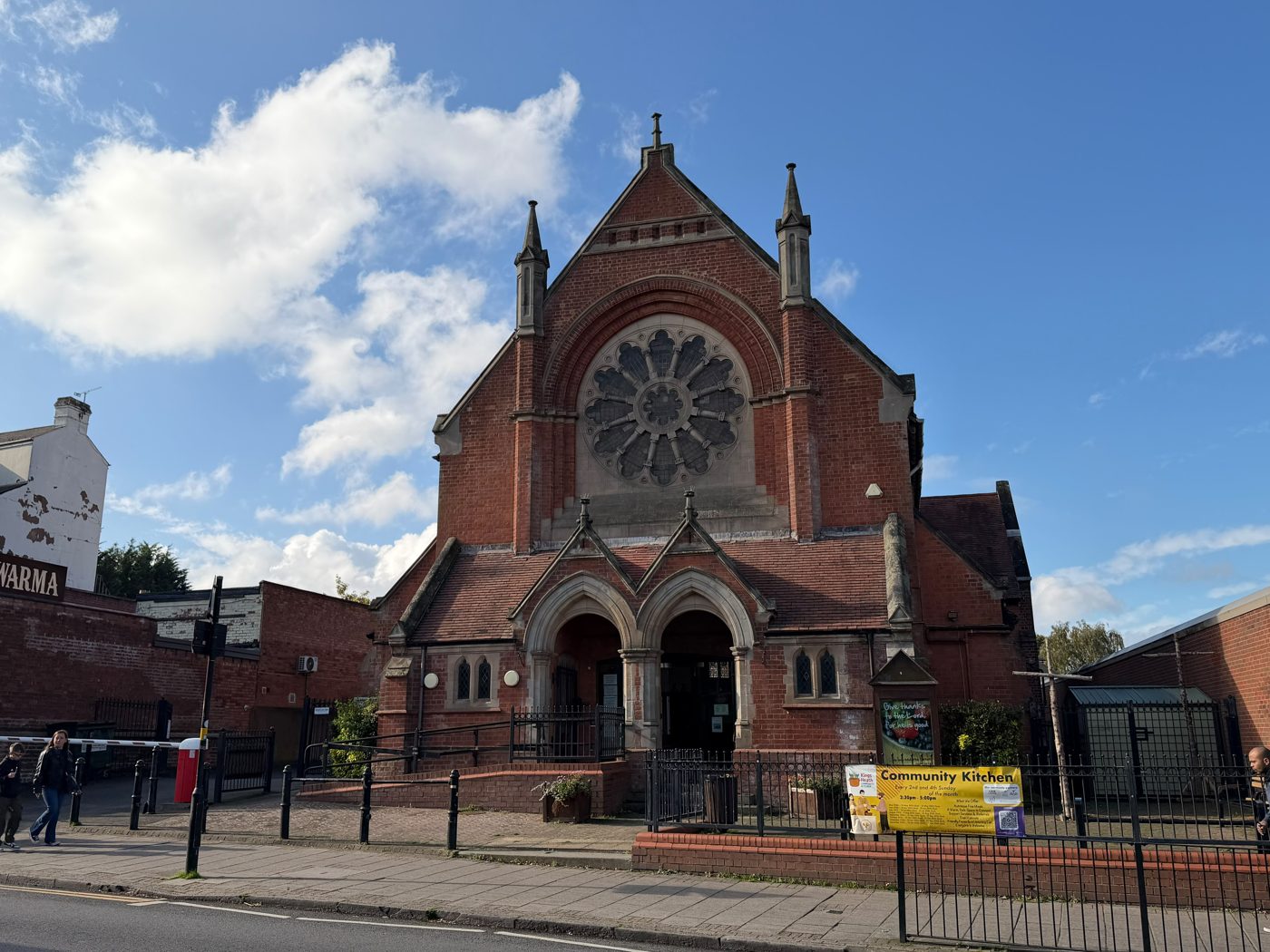
The more recent vision of Igreja Baptista Local in northern Portugal answers that question with the phrase “incubator of churches.” The 2026 mission report presents the Local not merely as a church plant seeking stability, but as a platform for partnerships, new church plants, revitalization, and practical missionary training (Melo, 2026). The change in language matters. The church begins to think not only about gathering but also about sending.
This movement reflects a recurring New Testament dynamic. Communities reached by the gospel become participants in the expansion of the gospel. Antioch is perhaps the clearest example: a multicultural church outside the traditional center of Jerusalem becomes a missionary sending base (Acts 13:1–3). The logic is circular. Those who receive begin to contribute; those who were a field become a base as well.
Partnerships that do not manufacture dependence
The first dimension of a mission platform is the construction of partnerships with churches, conventions, mission agencies, and other Christian organizations. In a globalized environment, few church-planting projects need to function in isolation. Partnerships can offer prayer, training, resources, experience, short-term teams, institutional knowledge, and access to networks.
Partnership, however, is not a synonym for dependence. Reverse Mission literature repeatedly points toward reciprocal relationships. Soares (2026) argues that emerging cooperation between South and North should abandon fixed hierarchies and practice mutuality. This requires recognizing that money is only one missionary resource. Local knowledge, cultural credibility, leadership, hospitality, pastoral experience, and relational access are resources as well.
A healthy partnership asks not only, “How much can each side give?” but also, “What responsibility will each side assume?” This protects both against the paternalism of the funder and the passivity of the receiver. It also prevents a local church from becoming a long-term branch office for outside interests. Partnership should enlarge local capacity, not replace it.
Planting, revitalizing, and strengthening
The second dimension is using an established local church as a base for new work. The Local report envisions support for new church plants in cities with little evangelical presence and cooperation with fragile congregations through training, encouragement, and practical assistance (Melo, 2026).
This combination of planting and revitalization is strategically important in European contexts. Mission does not happen only where no churches exist. Historic congregations with buildings, memory, and local presence may need theological, generational, and missionary renewal. Treating every place as an “empty field” would ignore history and waste opportunities for cooperation.
At the same time, revitalization should not become an excuse to avoid new church planting. Demographic change, urban growth, mobility, and new populations create settings where new congregations may be needed. A mission platform must therefore discern different responses for different places, rather than turning a single model into a universal solution.
Practical missionary formation
The third dimension may be one of the most important for Reverse Mission: turning the local church into a laboratory for intercultural learning. The 2026 report envisions receiving and training new missionaries, giving them opportunities to observe local culture and understand how a Christian community is established in the Portuguese context.
This approach addresses a frequent gap in missionary preparation. Theological and missiological formation is indispensable, but it cannot replace situated learning. A missionary may master concepts about contextualization and still fail to notice how tone of voice, time management, humor, leadership style, or decision-making patterns are being received locally.
Lidório (2014) emphasizes that cross-cultural communication requires understanding the cultural codes of the receiving community. A host church can turn this principle into a formative process through mentoring, observation, gradual participation, reflection after concrete experiences, and close contact with local leaders. Instead of launching the newcomer immediately into visible leadership, a mission platform teaches people to listen before they lead.
Local leadership as a criterion of maturity
The fourth dimension is decisive: forming Portuguese leaders to lead their own people. No cross-cultural church plant should consider itself fully mature while identity, decision-making, and leadership reproduction remain excessively dependent on a foreign missionary.
This does not mean that local leadership is automatically better simply because it is local. All leaders require formation, character, doctrine, mentoring, and accountability. The issue is ecclesiological: the gospel must take root deeply enough for the community to develop leaders capable of teaching, shepherding, discerning, and sending from within its own context.
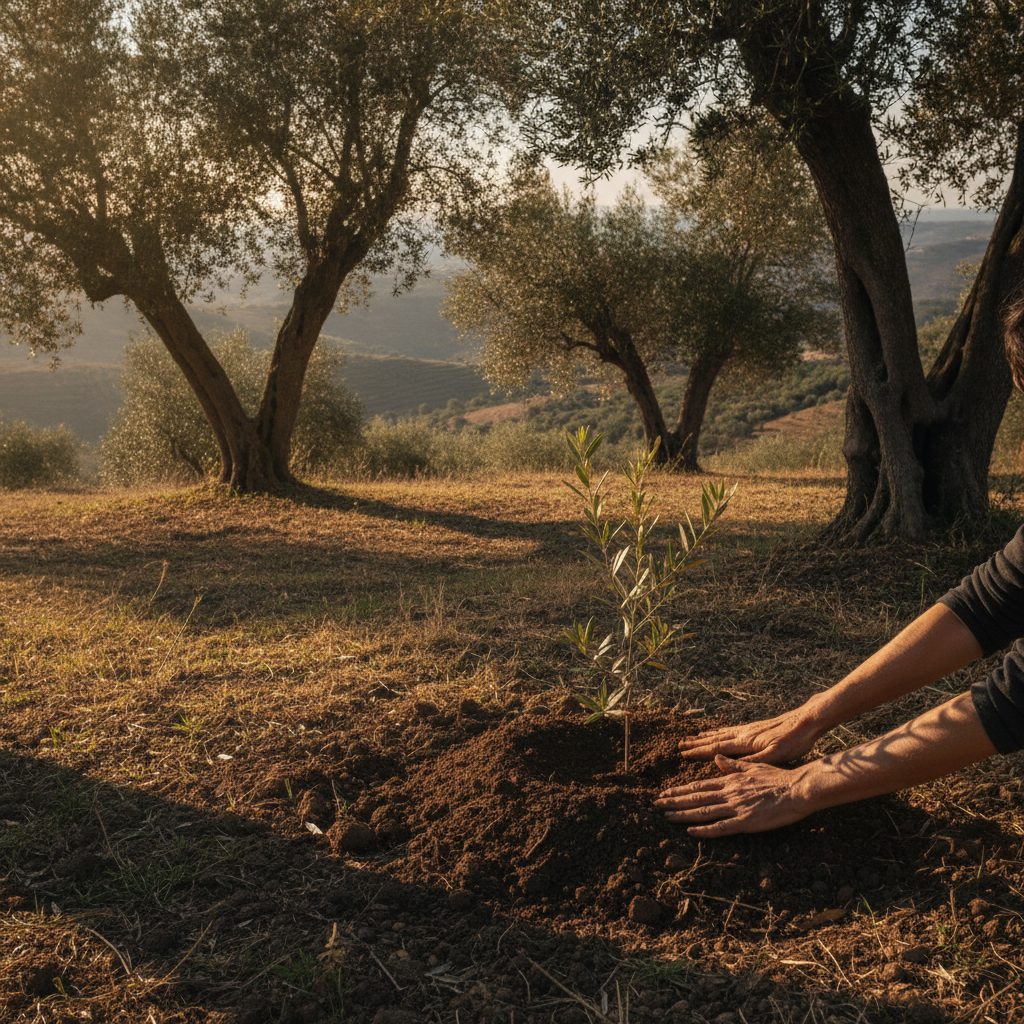
The Local experience has sought to train small-group leaders, disciples, and emerging ministry leaders, both Portuguese and immigrant, with the stated goal that they will also train others. This pattern resonates with 2 Timothy 2:2: entrusting what has been received to faithful people who will be able to teach others. Multiplication is not merely numerical; it is the responsible transfer of mission.
Portugal as a doorway—a vision, not a slogan
The Melo family’s mission materials repeatedly describe Portugal as a potential “door of blessing for all Europe.” The phrase is best understood as vision and vocation rather than a triumphalist claim to centrality. Portugal does not need to become “the new center” of European mission. The beauty of a doorway is precisely that it exists for passage, connection, and sending.
A church that becomes a platform can connect Brazilian, North American, Portuguese, and other European churches; host missionaries in formation; cooperate with local congregations; test approaches to small groups and discipleship; and support new initiatives. Its strategic value lies in the network, not in isolated prominence.
This vision brings the logic of Reverse Mission full circle. The goal is not for Brazilian missionaries to evangelize Portugal indefinitely. It is for the gospel to take root, form Portuguese disciples, raise Portuguese leaders, and, in God’s time, send Portuguese believers to other places as well. At that point, “field” and “base” cease to be fixed identities. Every church remains a field because it continually needs the gospel; every church is a potential base because it is called to participate in God’s mission.
The maturity of a church plant, therefore, is not measured only by how many people enter. It is also seen in how many are formed to serve, how many new communities can emerge, how much cooperation is generated, and how successfully a founder can become less indispensable. Mission completes the circle when those who were reached discover that they, too, are sent.
References
The Holy Bible. Acts 13:1–3; 2 Timothy 2:2.
Escobar, Samuel. Cómo comprender la misión: de todos los pueblos a todos los pueblos [Understanding Mission: From All Peoples to All Peoples]. Buenos Aires: Ediciones Certeza Unida, 2008.
Lidório, Ronaldo. Comunicação e cultura: a antropologia aplicada ao desenvolvimento de ideias e ações missionárias no contexto transcultural [Communication and Culture]. São Paulo: Vida Nova, 2014.
Melo, João. Church Planting in Portugal: Local Church as a Platform. Mission report, 2026.
Soares, Lierte. Introdução a Missão Reversa: O Círculo Completo do Evangelho [Introduction to Reverse Mission: The Gospel’s Full Circle]. Unpublished manuscript, 2026.
Note: this article was developed from the plenary material “Come Over and Help Us,” the missionary reports of Igreja Baptista Local, and the literature listed in the references.